
The Millennial Dragon Tree of Icod de los Vinos: Legend and Nature
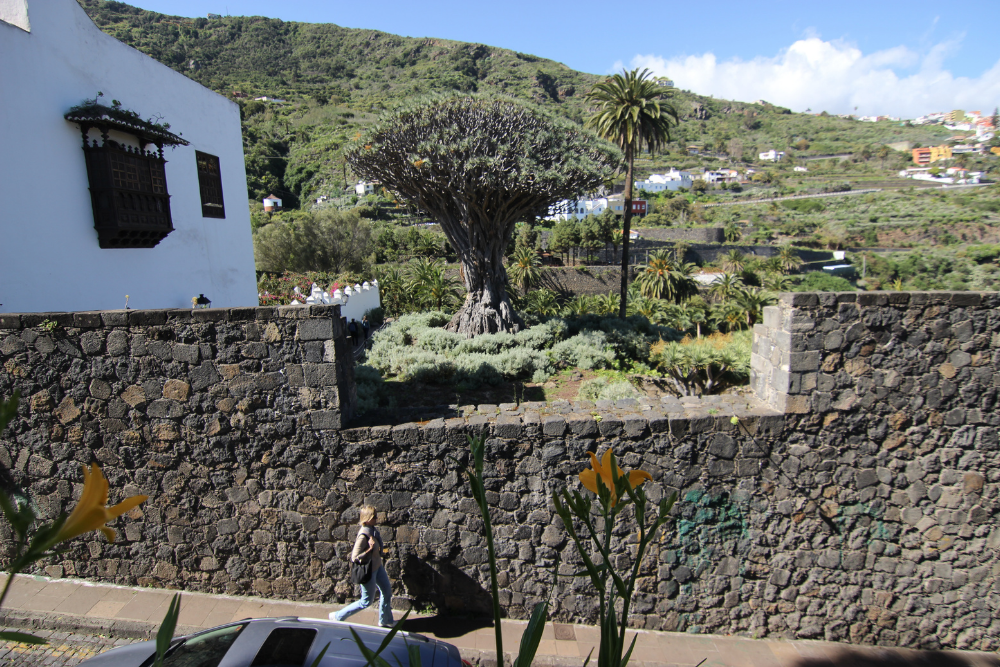
IImagine a living monument that was already ancient when the first explorers arrived in the Canary Islands. As the supreme symbol of Tenerife, the Millennial Dragon Tree of Icod de los Vinos stands as a silent witness to history. According to botanical studies, this umbrella-shaped canopy has watched over the landscape for an estimated period of 800 to 1,000 years.
However, the biggest surprise woven into the history and legends of the Millennial Dragon is that this giant is not actually a tree. Scientifically, it is a «monocotyledon»: a massive herbaceous plant more akin to a common garden lily than an oak. As it completely lacks traditional wood and growth rings, calculating its exact age remains a wonderfully complex puzzle.
The Dragon's Blood myth
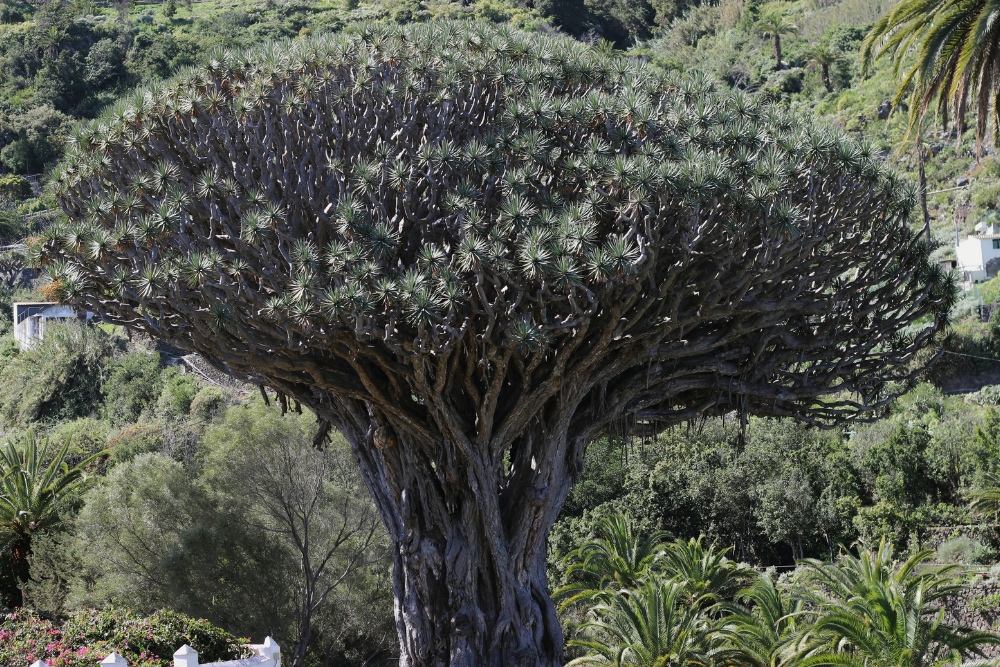
When drilling into the rough, elephant-skin-like bark of the Drago, something surprising happens: it bleeds. For the ancient Guanches—the indigenous peoples of Tenerife—this thick, crimson sap was far more than a simple plant secretion. They believed it to be the actual blood of fallen dragons, a belief that formed the core of the Mythology and symbolism of the dragon tree. Due to these mystical associations, the Guanches revered the plant, utilising its resin in sacred mummification rituals to meticulously preserve their dead.
Centuries later, European explorers quickly discovered the practices Dragon's Blood resin properties. Botanists« current understanding of plants» chemical defence mechanisms against pests, this became a highly sought-after commercial export. Renaissance artisans and chemists greatly valued this "dragon's blood" for three main uses across the continent:
- Medicine It was ground into potent powders to accelerate wound healing and treat various ailments.
- Varnish Famous luthiers, including Stradivarius, allegedly mixed it into their varnishes to give violins their rich, reddish sheen.
- Dye Royalty sought the pigment to naturally dye exotic fabrics and textiles.
The The cultural importance of the Drago tree for the Guanches and its fascinating history of global trade explain why this magnificent giant is so fervently protected today. However, despite centuries of human fascination with its crimson sap, a persistent mystery often baffles those who stop beneath its enormous canopy. If this unique plant does not produce solid wood like normal trees do, how do we know exactly how long it has been standing?
How do scientists calculate Drogo's age
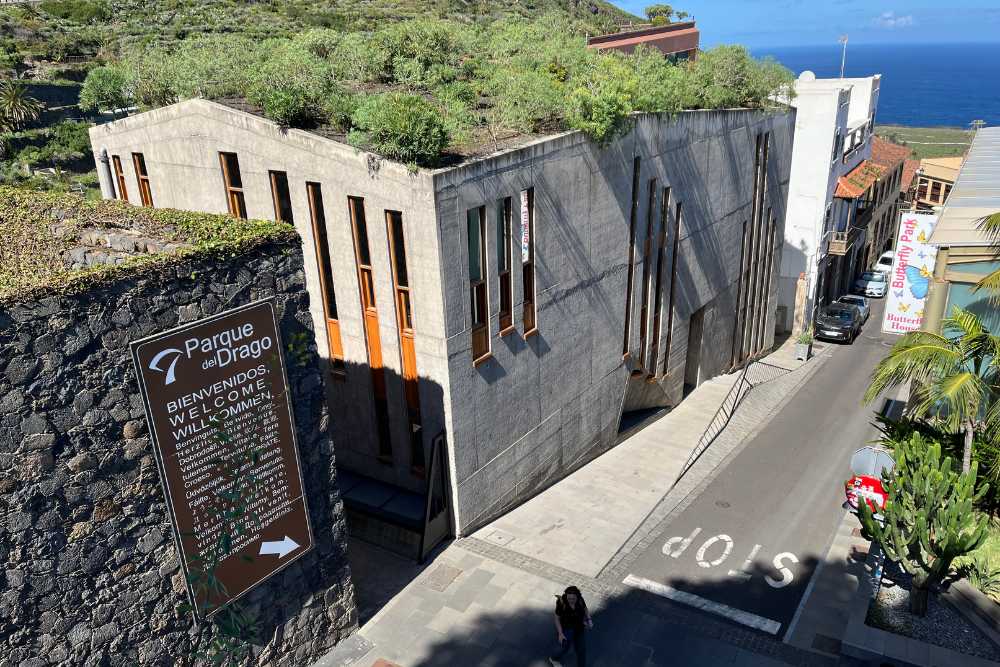
Entrance to Drogo Park
Most of us learned at school that the age of a tree is hidden within its trunk as a series of concentric rings. However, the Millennial Dragon plays by completely different botanical rules. As it is essentially a giant relative of the asparagus rather than a true tree, it never develops solid wood or annual growth rings. Attempting to date it by traditional methods is like trying to read a history book that has no page numbers. This biological quirk allowed early legends to easily claim the giant was over 3,000 years old.
To solve this botanical mystery, scientists had to look to the canopy rather than the depths of the trunk. The secret to tracing their age lies in their unique growth cycle. A young Dragon Tree grows straight as a single unbranched stem until it produces its first flower. After this flowering, which occurs only once every ten to fifteen years, the plant sprouts a new fork of branches. Each flowering cycle adds another layer of branches, slowly building that iconic mushroom-shaped crown over the centuries.
Counting these branching points and taking historical weather patterns into account finally helps experts to answer How old is the Drago of Icod. Although these Dracaena draco species characteristics they refute the myth of three millennia, with scientific estimates still placing their true age at an impressive 800 to 1,000 years. Having unveiled the ancient biology that stands before you, it is time to leave science behind and plan how to experience this living monument firsthand during your visit.
How to see the Drago like a local
Seeing this botanical wonder shouldn't involve a frustrating search for parking. Save time by wondering Where to park near Drago Park heading directly to the municipal car park on Calle Julio Ascanio. This convenient location positions you perfectly to explore the historic cobblestones of Icod de los Vinos a pie.
When choosing your viewing point, there are two distinct experiences depending on your budget and itinerary:
- The close-up visit To walk directly under its enormous umbrella-shaped canopy, plan your route considering that Visit Drago Park prices and opening times They generally cost around €5 for adults, with doors opening daily from 9:00 am until the late afternoon.
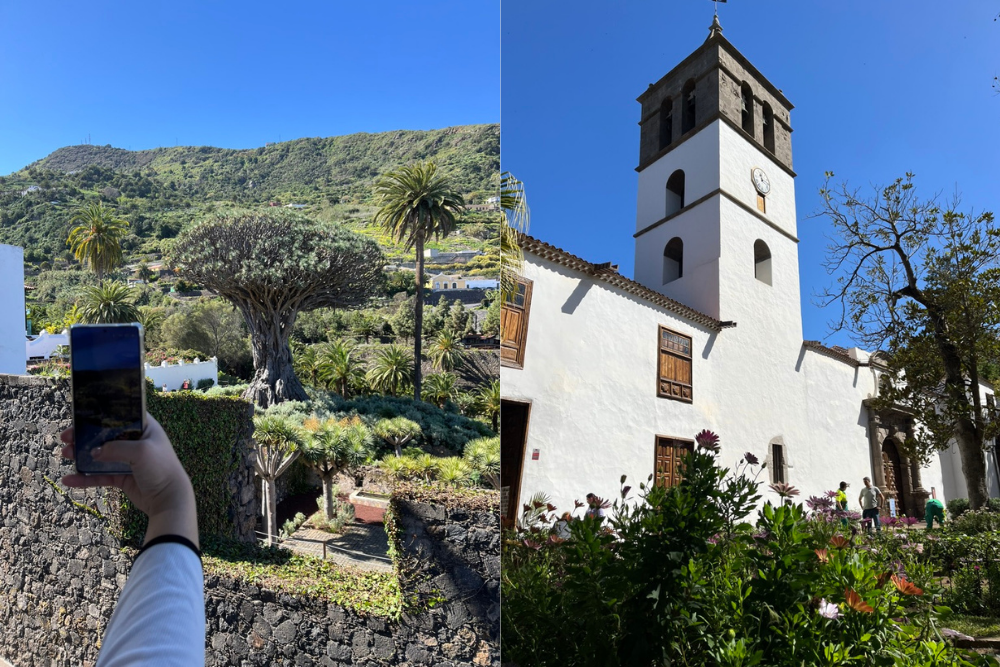
- The local secret: For a panoramic photograph without buying a ticket, wander to the Plaza de la Constitución where you can also visit the Church of San Marcos. This elevated terrace is undoubtedly one of the The best free viewpoints of the Millennial Dragon Tree.
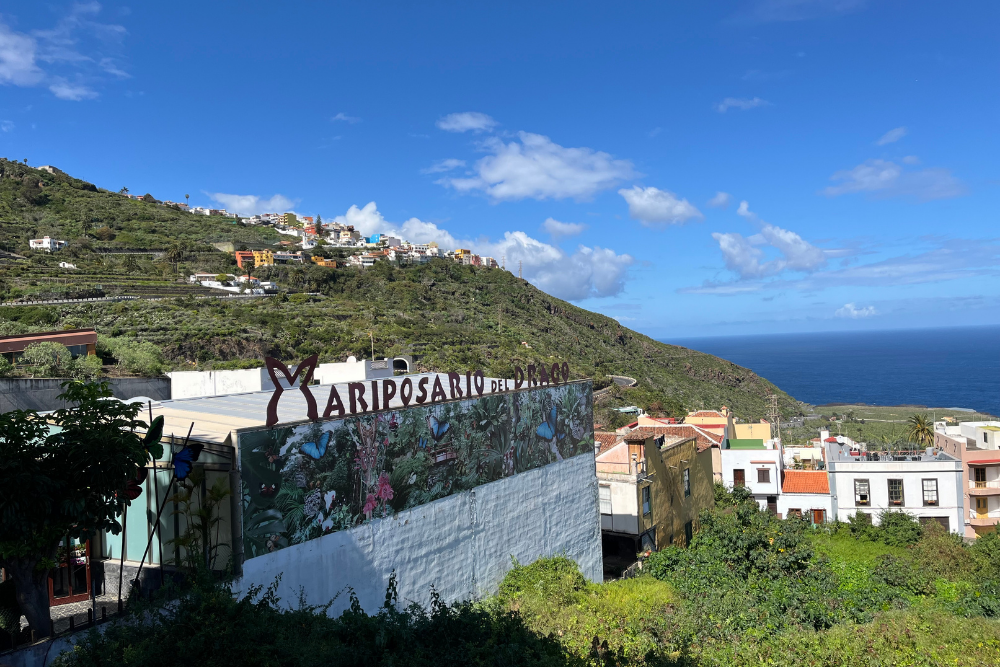
After admiring the view, you can easily complete your excursion by tasting local Malvasia wines or visiting the adjacent butterfly house. Whether you observe from the square or stop right next to its ancient roots, gazing at this giant naturally makes you appreciate its precarious survival. But what exactly ensures it doesn't collapse? This brings us to measures to protect this sentinel.
Protecting the 70-tonne living sentinel
When you contemplate its colossal canopy today, you are no longer looking at just a beautiful myth; you are witnessing a triumph of modern engineering saving age-old nature. conservation status of the Millennial Dragon Tree relies on hidden interventions, such as specialised internal fans that blow air into its hollow trunk to prevent rot. Knowing these unseen threats transforms the way we appreciate this giant, recognising it as a fragile piece of the Endemic flora of the Canary Islands which requires our unconditional protection.
When consulting your Guide to natural monuments in Tenerife, your role shifts from spectator to active participant in its preservation. Begin by strictly respecting the site's boundaries that protect its sensitive roots from soil compaction. Next time you stand before this living time machine, let its resilience inspire you to practice responsible tourism, ensuring the dragon tree's legacy survives intact for future generations.
If you want to come and visit, you can do so, as it's about a 10-minute drive from any of our properties in The Seagull Farm from Tenerife Living.
Related articles

Golf course on holiday in Tenerife Very close to our flats and bungalows, both in the north and in the south of the island.
Tenerife boasts a wide range of theme parks with different settings offering fun activities for all ages[...]

Whale and dolphin watching is a unique experience for your holiday. During a boat trip in Tenerife, you will be able to admire[...]


 Español
  Deutsch (Sie)
  English (UK)
  Italiano